
Farm fences
How to Choose the Right Farm Fence for Your South Carolina Property
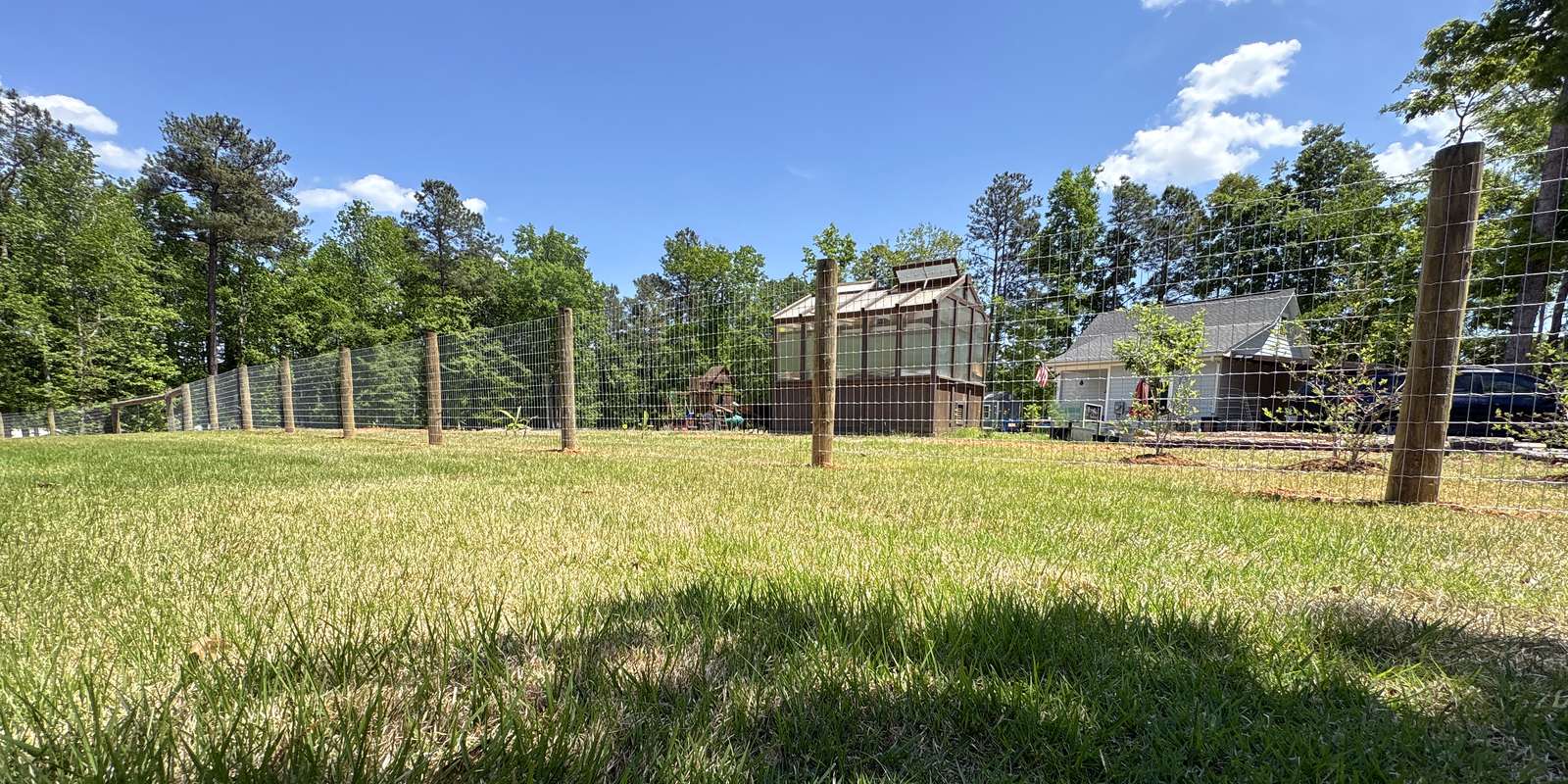
The right farm fence starts with a simple question. What does it have to hold? A fence that works for a pair of horses may be wrong for goats, and a fence for a vegetable garden is a different job from a fence along a road. Get that answer first and the rest gets easier.
Start with the animals
Horses need a fence they can see, so a board fence or a wire fence with a visible top rail works well. Cattle push, so strength and solid posts matter most. Goats climb and lean on wire, so the spacing and the height need extra thought. Poultry and small animals need tight openings, protection near the ground and a plan for whatever wants to get in. Smaller places often keep dogs, poultry and even a pig, and wire fences can be built for all of them.
Tell us what you keep now and what you might keep later. Adding animals is easier to plan for before the fence goes in.
Wire, board or field fence
We build three main styles, and each one fits a different job.
Wood and wire pairs wood posts and rails with woven wire. It holds smaller animals, dogs and poultry, and it looks right on a homestead. Board fence is wood boards, usually three rails, that animals can see easily. Field fence is woven wire on posts, and it suits long runs and bigger pastures.

Chain link has a place on a farm too, around a dog run, a garden or an equipment area, where you want a tight and secure boundary.
Corners decide how long it lasts
Wire only stays tight if the corners hold. A braced corner takes the pull of the whole run, so it gets heavier posts and proper bracing. When a wire fence sags, a weak corner is usually why. It is the first place to look.
Gates, planned early
Put gates where you will actually use them. Think about the widest thing that has to go through: a tractor, a trailer, a mower, a horse trailer. A gate that is a foot too narrow gets annoying every day. Many properties want a walk gate for people and a wide gate for equipment.
We build farm gates in wood or black steel with wire mesh to match the fence. Wide gates hang on strong posts, and if the opening sits on a slope we plan the hinges so the gate can swing.

Think about next year
Land changes. You might add animals, split a pasture in two or put up a barn. Dividing a property into smaller sections makes it easier to rotate animals, rest the grass and keep one group away from another. Each division needs its own gates, and every gate needs a way for equipment to reach it. It is far cheaper to plan those now than to cut into a finished fence later.
Know where your line is
Before a fence goes along a boundary, make sure you know where the boundary is. If the line is unclear, a survey settles it. Our post on building a fence on a property line covers what to check with neighbors and your local office.
Brush, trees and uneven ground
Most farm fences run through something. We build through brush, trees and uneven ground, and we walk the line with you before we quote it so the slope, the trees and the wet spots get planned in. If part of your land holds water after a heavy rain, tell us. It affects where posts and gates go.
Look it over after a storm
Wire fences ask for an occasional check, especially after a storm or a fallen tree. A loose post or a slack wire is a small fix when you catch it early and a bigger one when a horse or a cow finds it first.
Before you call
It helps to know roughly how many acres or how many feet of line you are looking at, what animals will live behind the fence, and where you want the gates. A sketch on the back of an envelope is plenty. If you have an old fence to remove, mention that too, because tearing out and hauling away is part of what we do.
Getting started
Not sure which style fits? Tell us what you have, and we will recommend one. You can read about our farm fences, send us the form, or call or text 803-609-9760. We serve Gilbert, Lexington, Chapin and the rest of the Midlands.